Dog-Friendly Beach Guide: Tide Times, Zones and Summer Bans to Check
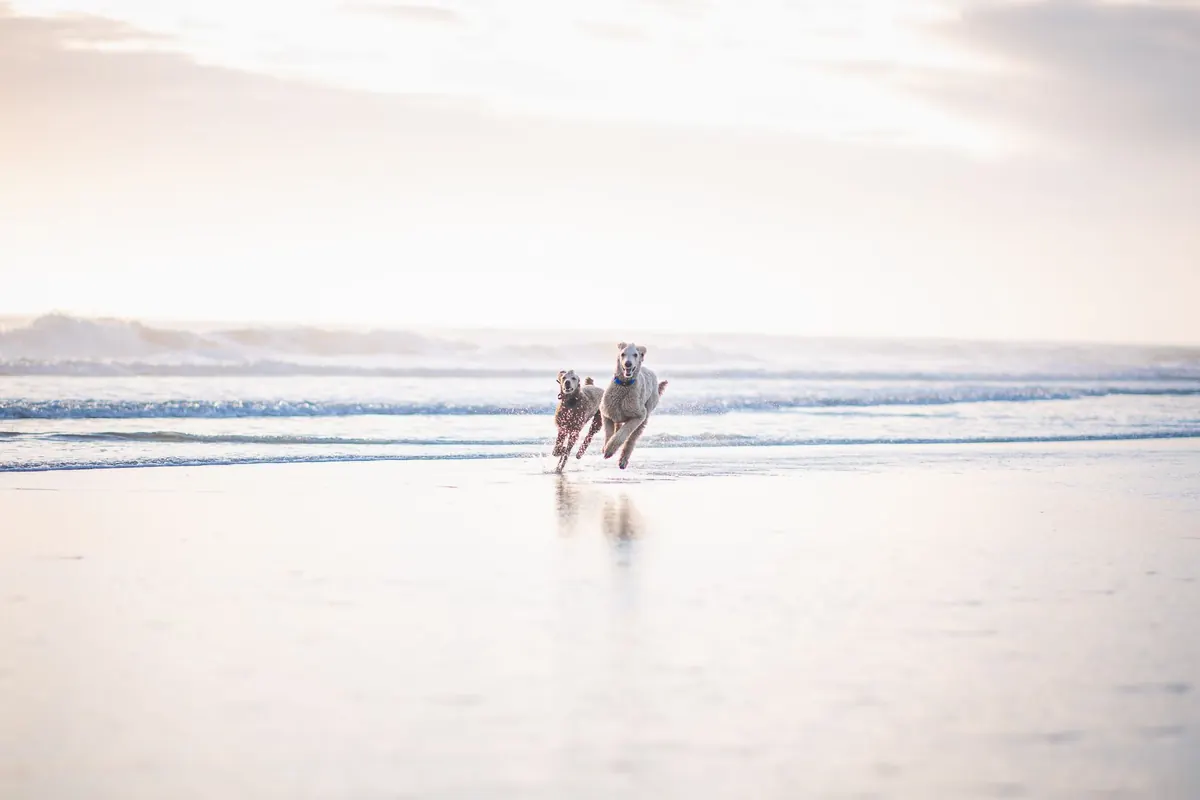
A wet dog, a wide horizon and a tennis ball that never quite comes back — it is one of the easiest good days out you can give a dog. It is also the day out most likely to be spoiled by a detail nobody checked. A seasonal ban that began on 1 May. A car park with a height barrier. A spit of sand that was a peninsula on the way out and an island by the time you turned round.
Most of the work happens before you leave the house. If you get the tide times, the local restrictions and the layout of the beach right, the rest is just walking.
Tides around the UK run on a cycle of roughly 12 hours and 25 minutes, which gives most beaches two high waters and two low waters a day. Because of that extra 25 minutes, tide times drift later by around 50 minutes each day. A beach that was perfect at 10am on Saturday will be full at 10am on Sunday.
For most dogs, the best few hours are either side of low water. The beach is at its widest, the sand is firmest underfoot, rock pools are exposed and there is room to throw a ball without it landing in someone's picnic. Aim to arrive an hour or so after high water and leave well before the next one, rather than turning up at the moment of low tide and having half your walk squeezed.
Spring tides — the bigger ones around the new and full moon — push further up the beach and move faster across flat sand. This matters most in estuaries and on long, shallow bays, where the water does not come at you in a neat line. It creeps into channels behind you first, and those channels fill before the main flow arrives.
Never walk out onto a sandbank, a spit or exposed mud with the tide already on the turn. On foot, on soft sand, the incoming water can easily outpace you, and the route back may already be under a foot of water.
If water is between you and your route back, you have left it too late.
Many coastal councils restrict dogs on some beaches during the summer months, typically from around May to September and often during the middle of the day. These are usually enforced through Public Spaces Protection Orders or beach byelaws, and the details vary enormously from one place to the next. Some ban dogs from the whole beach; others keep a section open year-round. Fines and enforcement differ, and signage at the access point is what you will be judged against.
Before you commit to a beach, check:
If the wording is unclear, ring the council's dog warden or beach office. It takes two minutes and saves an argument on the sand.
"Dog-friendly" on a website can mean anything from a dedicated year-round beach to a strip of shingle beside a sewage outfall. Judge it on the practical details.
Even on a beach with no seasonal ban, parts of it need a lead — for the dog's safety, other people's comfort, or the law.
Upper beaches, shingle ridges and dune systems are nesting grounds for species such as ringed plover, oystercatcher and little tern. A dog running through a colony can scatter birds from eggs and chicks, and disturbance of protected nesting birds can be an offence. Dunes also hide adders in warm weather and are easily damaged by digging. Where seals haul out on rocks or sand, keep well back and put the lead on — a good rule is to stay far enough away that the animals show no reaction to you at all.
Mudflats look solid and behave like glue. They also hide channels that fill quickly and glass, metal and old bait from years of fishing. Slipways, breakwaters and rocky marks are popular with anglers, which means hooks, line and bait on the ground; check your dog's paws and mouth if it has been rooting around. Lesser weever fish bury in wet sand at low tide and their spines sting, so if your dog yelps on the sand and starts licking a paw, rinse it in warm water and speak to a vet.
If the sand is too hot for the back of your hand, it is too hot for paws — midday summer sand and shingle can burn pads. Walk early or late, and carry fresh water rather than letting a thirsty dog drink from the sea, which can cause vomiting and worse. Rinse the coat after a long swim, particularly in estuaries where the water is silty.
Keep dogs out of still, green or scummy pools behind dunes where blue-green algae may be present, and out of anything that smells of rotting seaweed. If your dog has swallowed something you are worried about, or is unwell after a swim, contact a vet rather than waiting to see how it goes.
Do those five things and the beach turns back into what it should be: an hour or two of sniffing, running and swimming, followed by a tired dog asleep on the back seat and sand in the footwells for a fortnight.
Photo: Christy Rice / Pexels
Previous Post
Best UK Beaches for Rock Pooling: A Beginner's Seasonal Guide
Next Post
Tidal Bores in the UK: Where to See One and How to Time Your Visit